
Many children know the work. The hard part is starting it — and finishing it. Getting out the materials, remembering the steps, staying with a task until it is done: these are skills, not character traits. And like any skills, they can be practiced, supported, and built one small routine at a time.
Start with a launch routine, not a lecture.
The hardest moment is the first minute. A short, predictable launch sequence removes it: same time, same place, materials out before the work begins. A two-minute setup — clear the desk, open the book, read the first problem aloud together — turns “time to start” from a negotiation into a habit. When the start is automatic, the work itself gets easier.
Make the steps visible.
A big assignment feels overwhelming when it lives only in a child’s head. Put it on paper: list the steps, estimate the time for each, and check them off as they go. That visible progress does two things at once — it teaches planning, and it gives the child proof that they are moving forward. A child who can see the next step is far less likely to stall on the whole task.
Use time, don’t fight it.
Short, focused work segments with brief movement breaks work better than one long stretch — especially for children who struggle to sustain attention. A timer makes the deal concrete: work until the timer rings, break, then come back. The break is part of the routine, not a reward for finishing, and returning after a break is itself a skill worth practicing.
Build a finish routine, too.
Starting gets the attention, but finishing is where confidence is built. End each work session the same way: pack the materials, check what was completed against the list, and name one thing that went well. A child who ends the session knowing what they finished comes back to the next session willingly. Unfinished work left scattered on the table teaches the opposite lesson.
Keep the environment boring on purpose.
A prepared workspace with materials at hand, and distractions — phone, television, unrelated tabs — out of reach, removes a dozen small decisions that drain focus. The goal is not a perfect room. It is a space where starting is the easiest thing to do.
Praise the process, not just the product.
Notice the start, the plan followed, the return after a break — not only the correct answers. Children repeat what gets recognized. When effort, persistence, and follow-through are named and praised, those habits grow stronger, and the grades tend to follow.
When starting and finishing stay hard, get support.
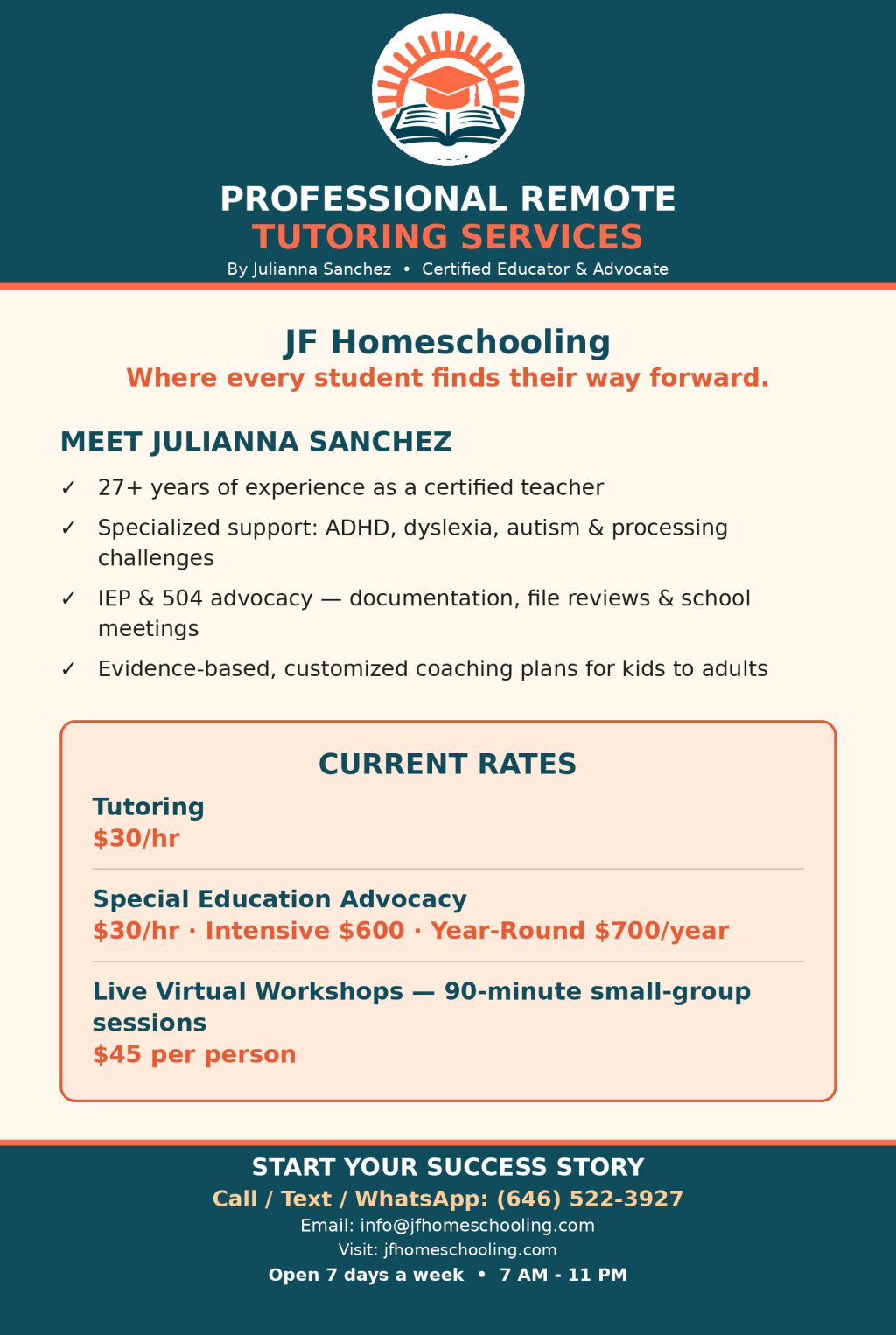
Some children need more than a routine — they need instruction matched to how they learn, including structured coaching in planning, organization, and study skills. Individualized tutoring can build those skills directly, step by step, alongside the schoolwork itself. Asking for support is not admitting defeat; it is giving a child the right tools for the job.
Small routines, kept consistently, change how a child approaches work. Start small, stay steady, and let the wins accumulate.
Contact me today to lock in your success!
Julianna Sanchez — JF Homeschooling, Professional Remote Tutoring Services
Specialized support for ADHD, dyslexia, autism, and processing challenges · IEP & 504 advocacy · Homeschool planning
(646) 522-3927 · info@jfhomeschooling.com
Open 7 days a week, 7 AM–11 PM


Leave a Reply